


This post breaks down one of our worst submissions to date. Interestingly, our grading results were solid (60.7% gem rate), but the markets fell sharply while we waited for our cards to be graded.
Low-value Pokémon cards dropped significantly between August and January, and this submission was filled with them. The situation was made worse by using PSA’s Value tier, one of the slowest service levels. It took over 3 months to get our results, then nearly another month for the cards to be shipped to and processed in PSA Vault.
We’ve now sold 27 of the 28 cards, which puts us in a good spot to analyze the results. Full disclosure, we will probably lose money on that 28th card, pushing total submission returns negative.
To give you a sense of the timeline for these market movements, all 27 cards were purchased in September and sold in January.
Submission Overview
Grading Results:
Total cards: 28
PSA 10s: 17
Gem Rate: 60.7%
Total Costs:
Purchase Price: $2,195
Grading Costs: $847
Total Investment: $3,042
Final Profitability:
Total Profit: $28
Return: 1.3%
This is about as bad as it gets. Our average submission generates a 42% return, and we generally target a minimum of 25%. This came in well below both thresholds.
The Biggest Losses
Here we’ll look at some of the cards that hurt the most. Keep in mind, losses include grading costs and selling fees. Generally, PSA 9s will lose money even without market downtrends, while PSA 10s are profitable.
2025 Pikachu McDonald’s Promo JP #020 PSA 10 (x4)
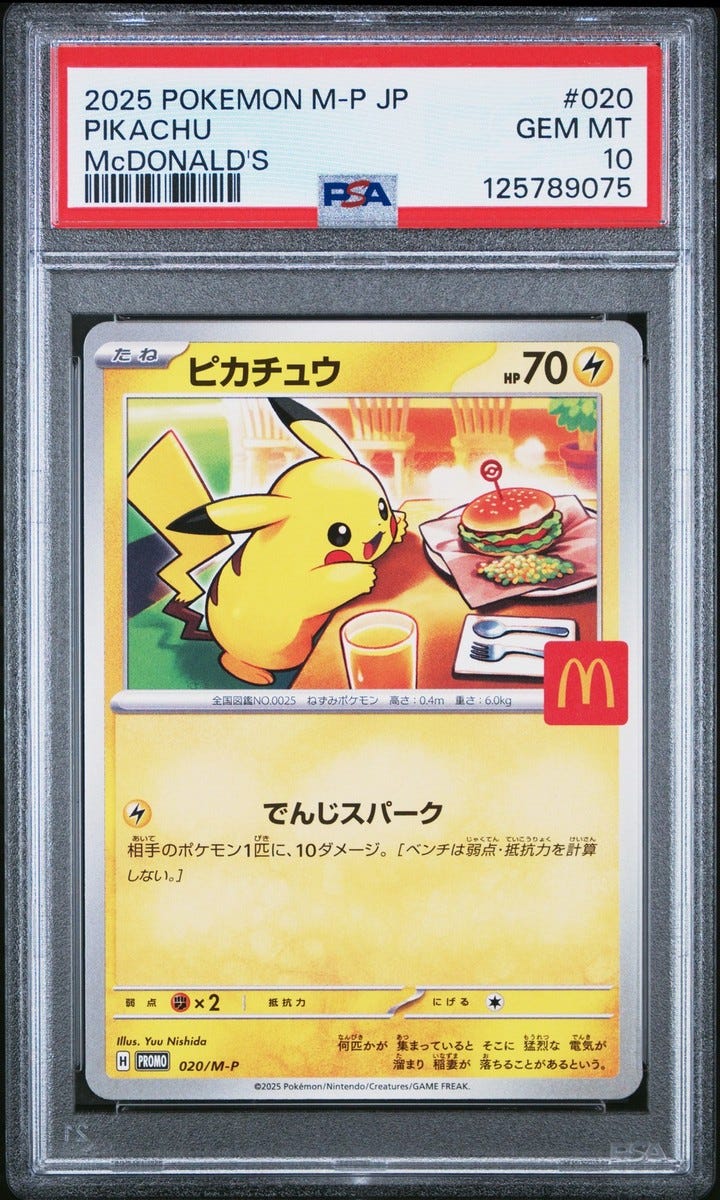
PSA 10 Value (Time of Purchase): $310
PSA 10 Value (Time of Sale): $60
Decline: 80.7%
Loss per card: $50
We bought four of these, which made it worse. Market movements are always a risk in this business model, but in this case, I think we made a mistake that could have been avoided. There were hundreds of ungraded sales of this card daily when we bought these, and we purchased these in spite of astronomical supply. We paid the price for that mistake: losing money on PSA 10s is never a winning strategy.
2019 Moltres & Zapdos & Articuno GX #SM210 PSA 9
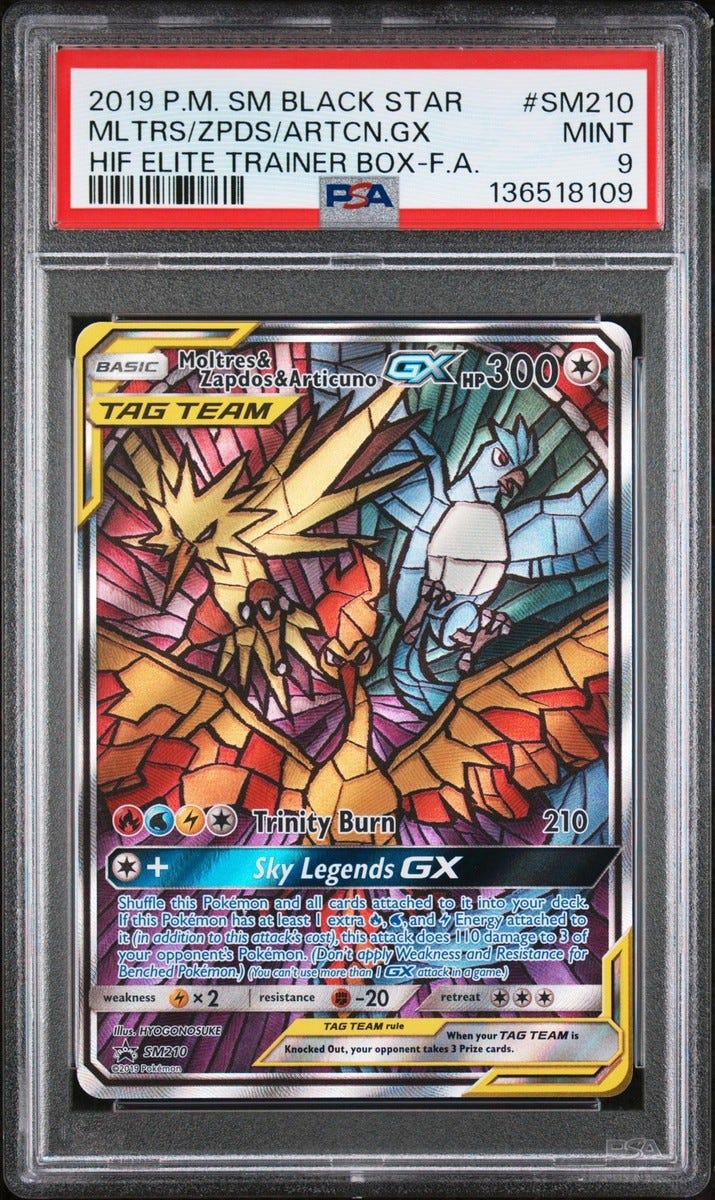
PSA 9 Value (Time of Purchase): $130
PSA 9 Value (Time of Sale): $90
Decline: 30.8%
Loss: $76
While this one fell less than the Pikachu above, a 30% decline still hurts, especially when the card grades as a PSA 9. This is the worst possible outcome, both a value decline and a sub-PSA 10 grade. That combination consistently leads to large losses.
That said, it’s hard to be upset about buying this one. We bought many copies of this specific card and most were profitable. The September to January window was just rough for Pokémon values. It happens.
2022 Origin Forme Palkia V #167 PSA 9
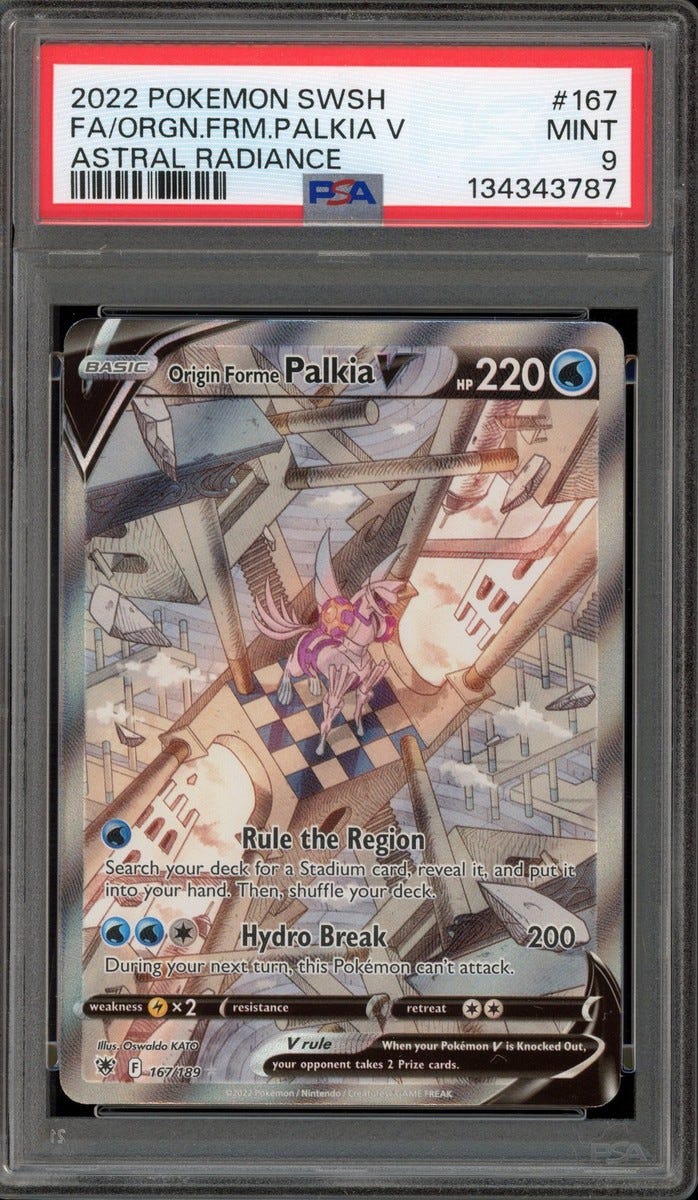
PSA 9 Value (Time of Purchase): $85
PSA 9 Value (Time of Sale): $50
Decline: 41.2%
Loss: $70
This is a similar story to the card above: a PSA 9 combined with a 40% market drop is tough. The price gap between PSA 10s and PSA 9s/ungraded cards was huge on this one (PSA 10s were worth nearly $400 at purchase), which usually leads to more exaggerated losses when the card grades as a PSA 9.
2019 Playing in the Sea Pikachu JP #394 PSA 4
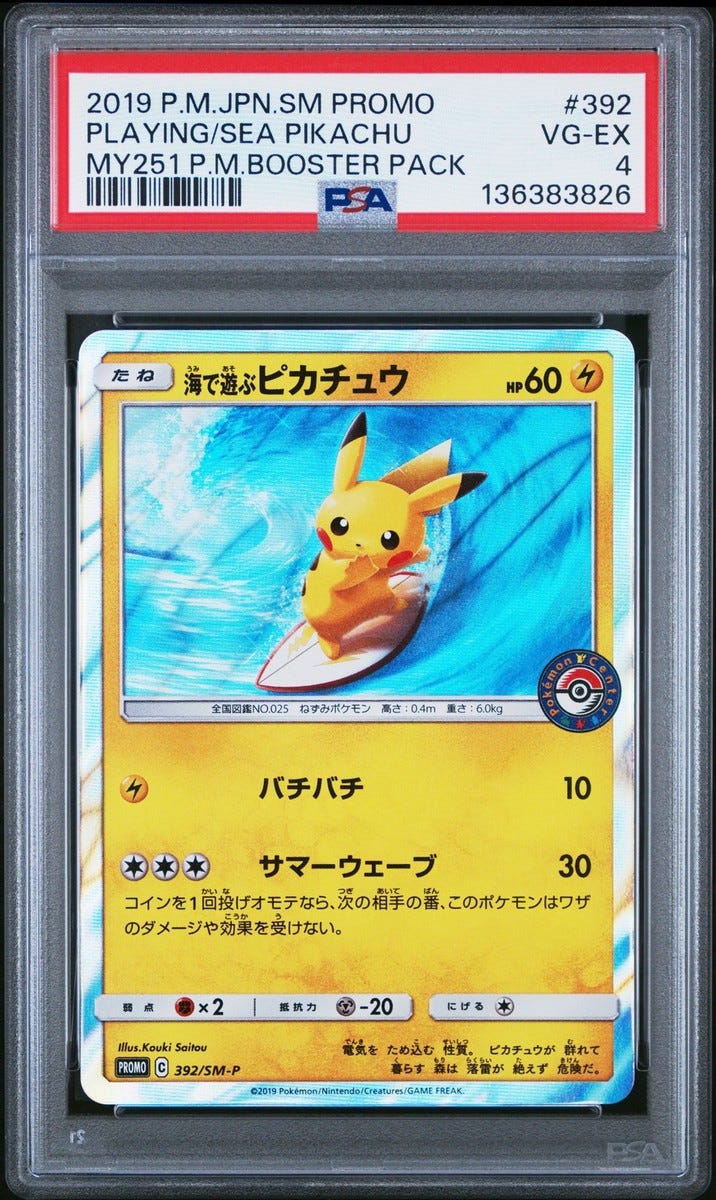
While our overall grading results were strong, it’s not unusual for a large submission to have a PSA 7 or 8 mixed in. But a PSA 4 is rare: this is actually the worst grade we’ve received since our very first submission. I’m not sure what happened, but luckily we only lost $60 (somehow).
Takeaways
This submission demonstrates how market risk increases with slower service tiers. The 4-month turnaround time gave the Pokémon market plenty of time to decline, and low-value cards (sub-$500) took the hardest hit.
Even with a strong process that you stick to consistently, you’ll have submissions like this. Results can vary a lot from submission to submission, as both grading results and market movements can be vastly different across subs. With that said, having a few submissions (or even months) when profitability is weak is part of the game. The key is making sure that this is the exception, not the rule. For instance, January was a weak month for us, but we still hit 11.7% net margins and 15.5% return on investment. The math still works, even when a couple individual submissions don’t.
If you have any questions or comments, please message me at the link below!
Very insightful, thank you. From a lifelong casual-to-semi-serious sports card collector.