


The Pokémon card market is booming, which is great for resellers. Higher prices generally mean there’s more viable cards to purchase, and higher profits to be made on these purchases.
But this also comes with a cost. Right now, there are more fake Pokémon cards than I’ve seen at any point in the last 2 years, which means buyers need to be cautious.
With that said, here is a short list of red flags to look out for when buying cards.
7 Tricks To Avoid Fake Pokémon Cards:
1. Avoid Rare Cards With High Quantity
This is one of the easiest red flags to spot. If you’re looking at a rare or expensive card, if the seller has 5, 6, or 10 cards available, this is a clear red flag. Now of course, there are some genuine power sellers out there who do have high supply of rare cards, which brings me to the second tip.
2. Check the Seller’s Feedback
If the seller has no reviews, this is a red flag. If the seller’s account is brand new, this is also a red flag. I’m fine with taking risks on newer or unproven sellers, but you need to think critically about it, especially if the seller triggers multiple red flags.
3. Be Cautious of Low Prices
Look, I’m fine with taking risks. If a card is listed by a decent seller at $400, but the market value is closer to $700, take a shot on it. But if a $1,000 card is listed for $80, it’s probably fake. Critical thinking goes a long way for this kind of issue, especially if a seller is triggering multiple red flags.
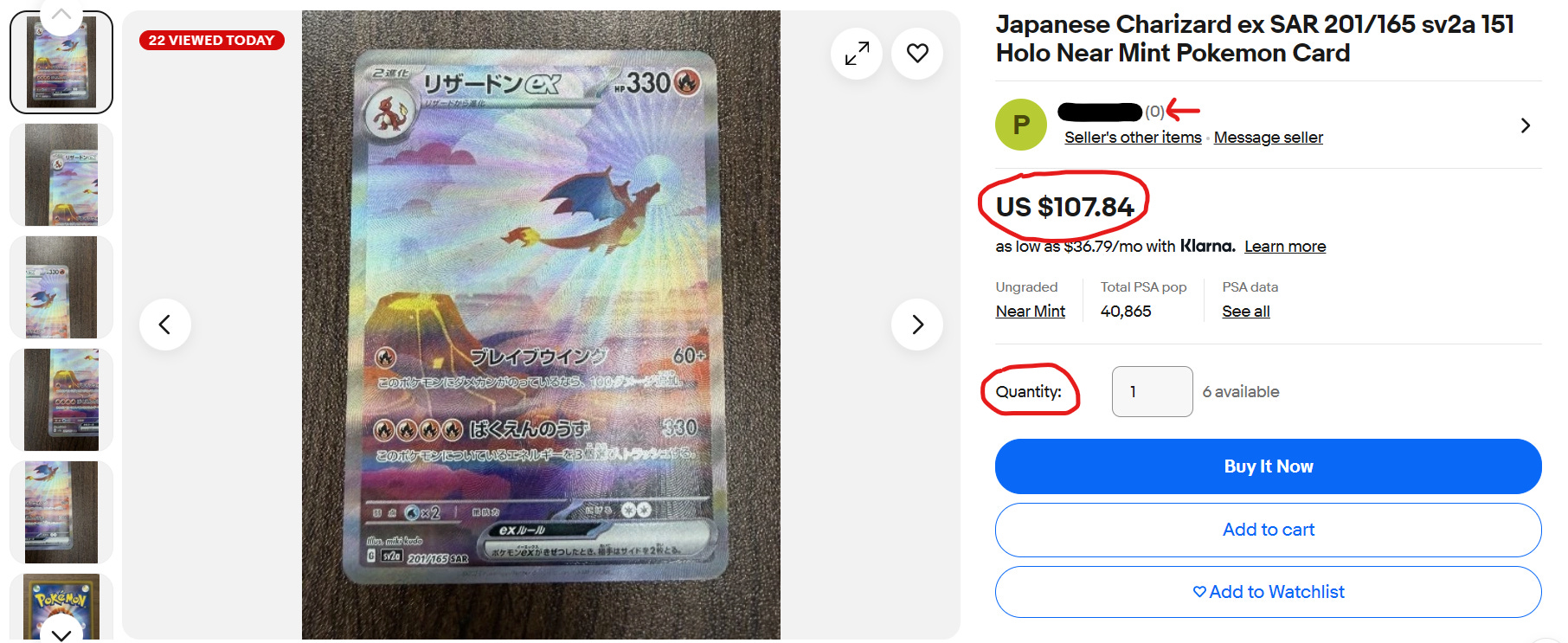
Here’s a good example of a listing that triggers each of the first 3 red flags:
4. Understand eBay’s Authenticity Guarantee Program
Ebay currently authenticates any card over $250. This can give you peace of mind because for these cards, even if you buy something fake, eBay will handle it for you. This brings about an important red flag. Did the seller price a $400 card at $249.99 to avoid authentication? Or did the seller list a $500 trading card into a different eBay category to avoid the authenticity program (i.e. listing a trading card as a kitchen appliance to avoid the program). Sellers trying to avoid the eBay AG program is a common red flag.
5. Unusual Descriptions Or Long Shipping Times
Sometimes I read a product description and it just looks like a scammer. The seller will mention that they have to sell urgently, or they have an exclusive supplier, yada yada yada... This is pretty much always a sign that there is some sort of scam.
Additionally, if the seller needs 2 weeks to process the card and another 2 weeks to deliver it, it’s probably a fake card that’s being dropshipped.
6. The Card Just Looks Off
Sometimes a card just doesn’t look right. Trust your gut. Two common things I’ve seen in fake listings is that the front surface looks too shiny or the back surface looks too dull.
I’ll also note that we’ve had a few fake cards sold to us, but so far they’ve been very obvious once the card was in hand. This is good news, but this is also bound to change as fake cards continue to improve.
7. Be Extra Wary of Chinese and Japanese Cards
So far, I’m seeing more fake Japanese and Chinese cards, which is unfortunate because lots of these are profitable to buy right now. This is bound to change over time as English cards are faked more often, but for now, be extra cautious with these cards.