


We just got results back on a 3 card submission worth about $3,500 total, and all three graded as PSA 10s. This is the ideal scenario: 100% gem rates with stable or increasing market values during the grading period. It doesn’t happen often, but it’s worth breaking down what profitability looks like when everything goes right.
Here is a quick look at the PSA upcharge email we received last week, which I was very happy to get (as you can see from the Note quoted below).
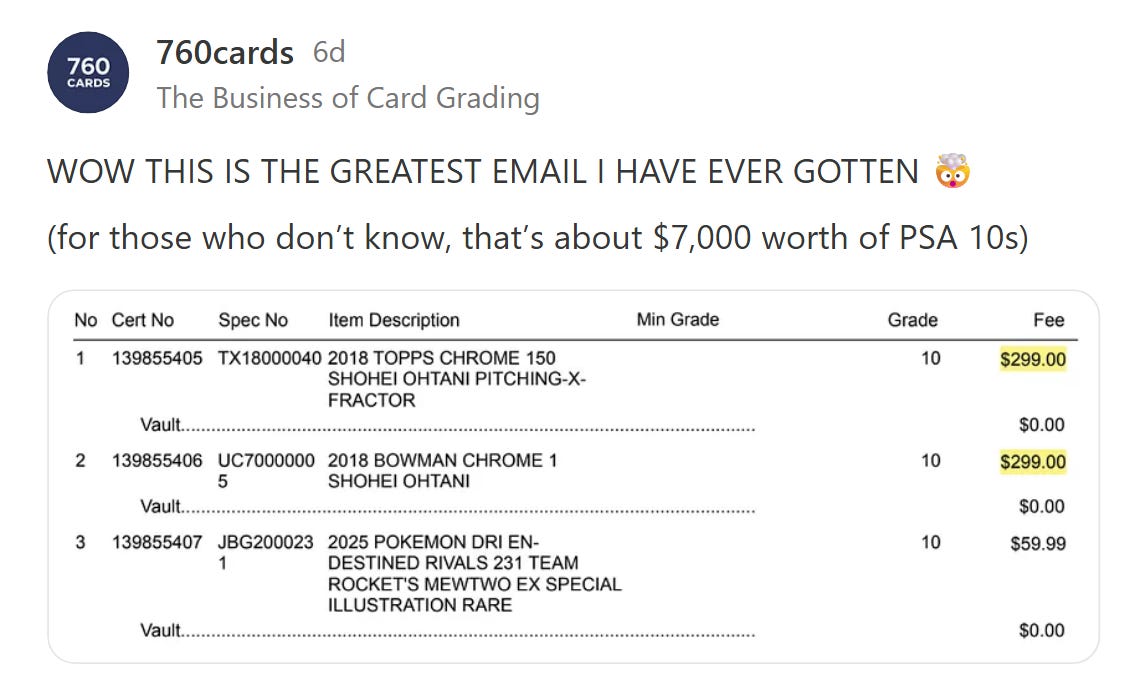
This wasn’t a shocking outcome. Each of these cards were in great condition with no noticeable defects. Based on our pre-grade, we gave each card a 60% probability of receiving a PSA 10.
Since each card had about a 60% chance of getting a PSA 10, the probability of all three hitting was around 22% (60% x 60% x 60%). While this is not incredibly unlikely, we still had a bit of luck on our side, especially since these were all high value cards.
Note that a couple of these had large upcharges, from $59.99 to $299.00. PSA assesses upcharges to cards when they exceed the maximum value of a given Service Level. We submitted these cards at the Value Max Service Level, which has a maximum value of $1,000. The upcharge to $299.00 is the amount assessed for cards worth between $2,500 and $5,000.
I will add pictures of each card to go along with the profitability analysis. As you will see, all are centered with sharp corners and no visible damage. Often we take some risks and submit cards that have slight imperfections. In this submission, we did not.
And here are a couple more notes before we dive into the profitability analysis:
All cards are worth between $1,000 and $5,000. Our selling fee percentage will be 10% for all. This is the consignment rate for PSA Vault.
We paid $100 for round trip shipping. We will include this expense at the very end.
These cards are currently being shipped to PSA Vault to be sold. Since they are not available for sale yet, we will use CardLadder values to estimate what the sale price will be.
Profitability Analysis
2018 Topps Chrome Shohei Ohtani #150 X-Fractor
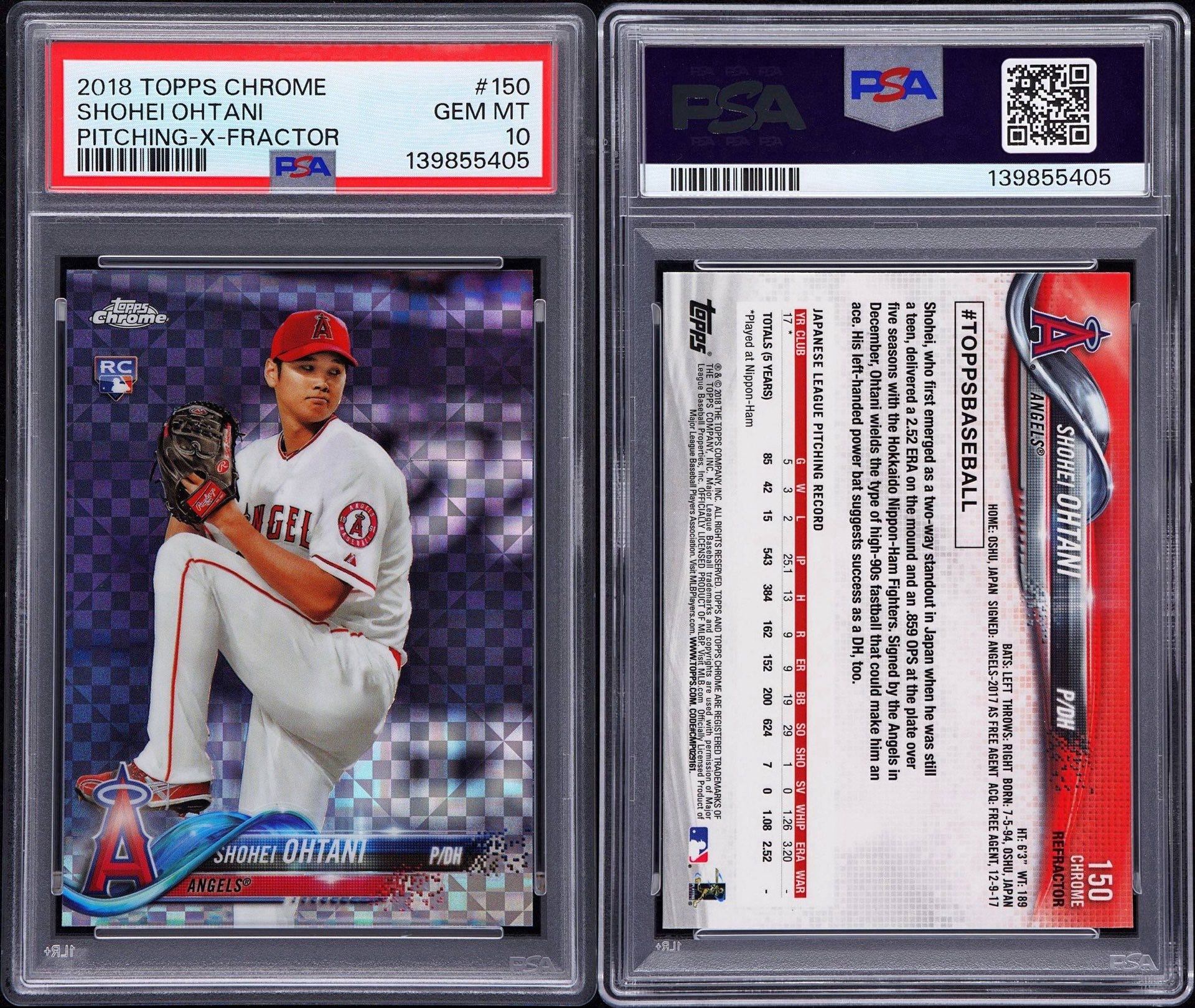
Estimated Sale Price: $3,650
Selling Fees: $365
Purchase Price: $1,696
Grading Costs: $299
Profit: $1,290
2018 Bowman Chrome Shohei Ohtani #1
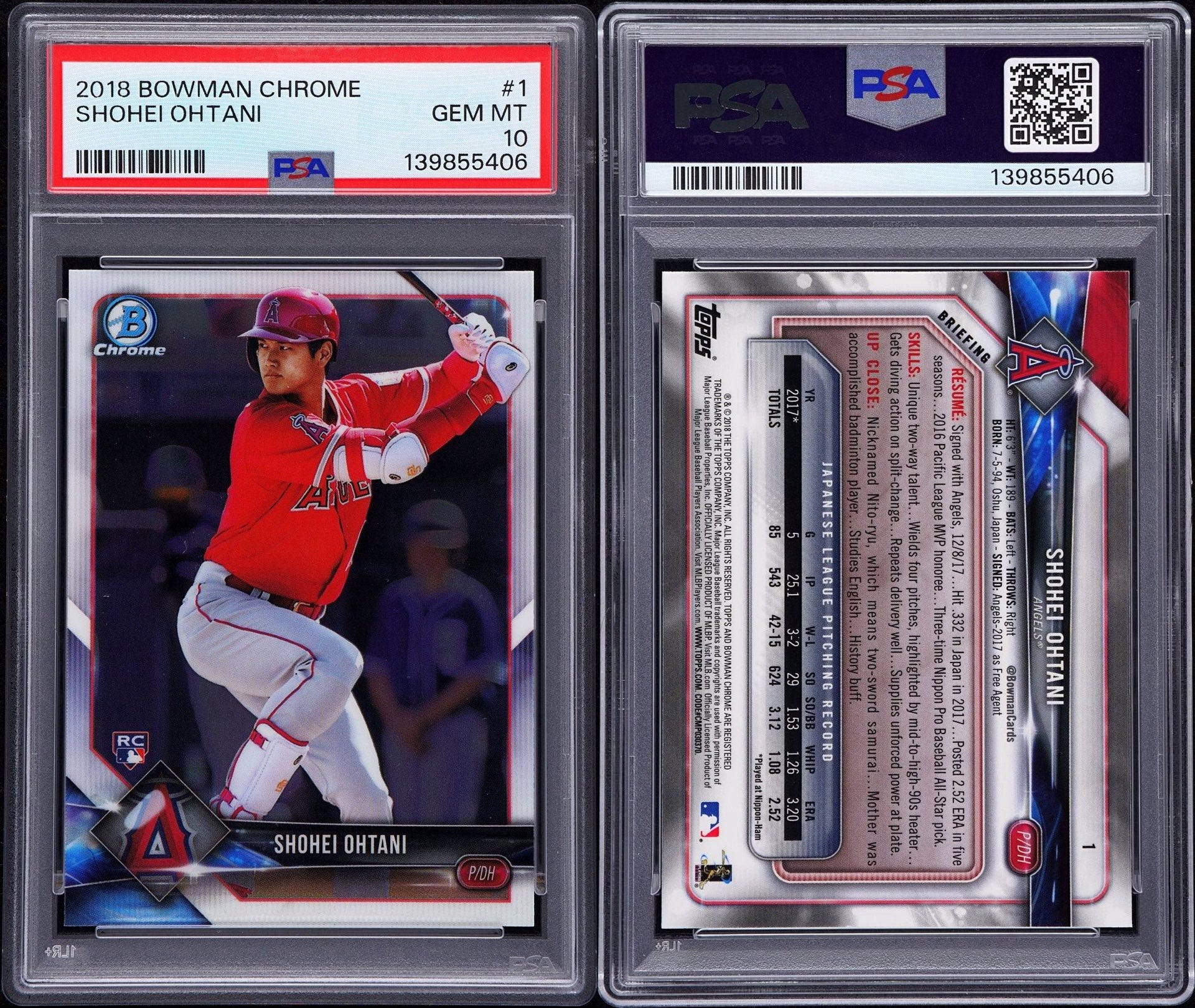
Estimated Sale Price: $3,600
Selling Fees: $360
Purchase Price: $1,206
Grading Costs: $299
Profit: $1,735
2025 Team Rocket’s Mewtwo EX #231
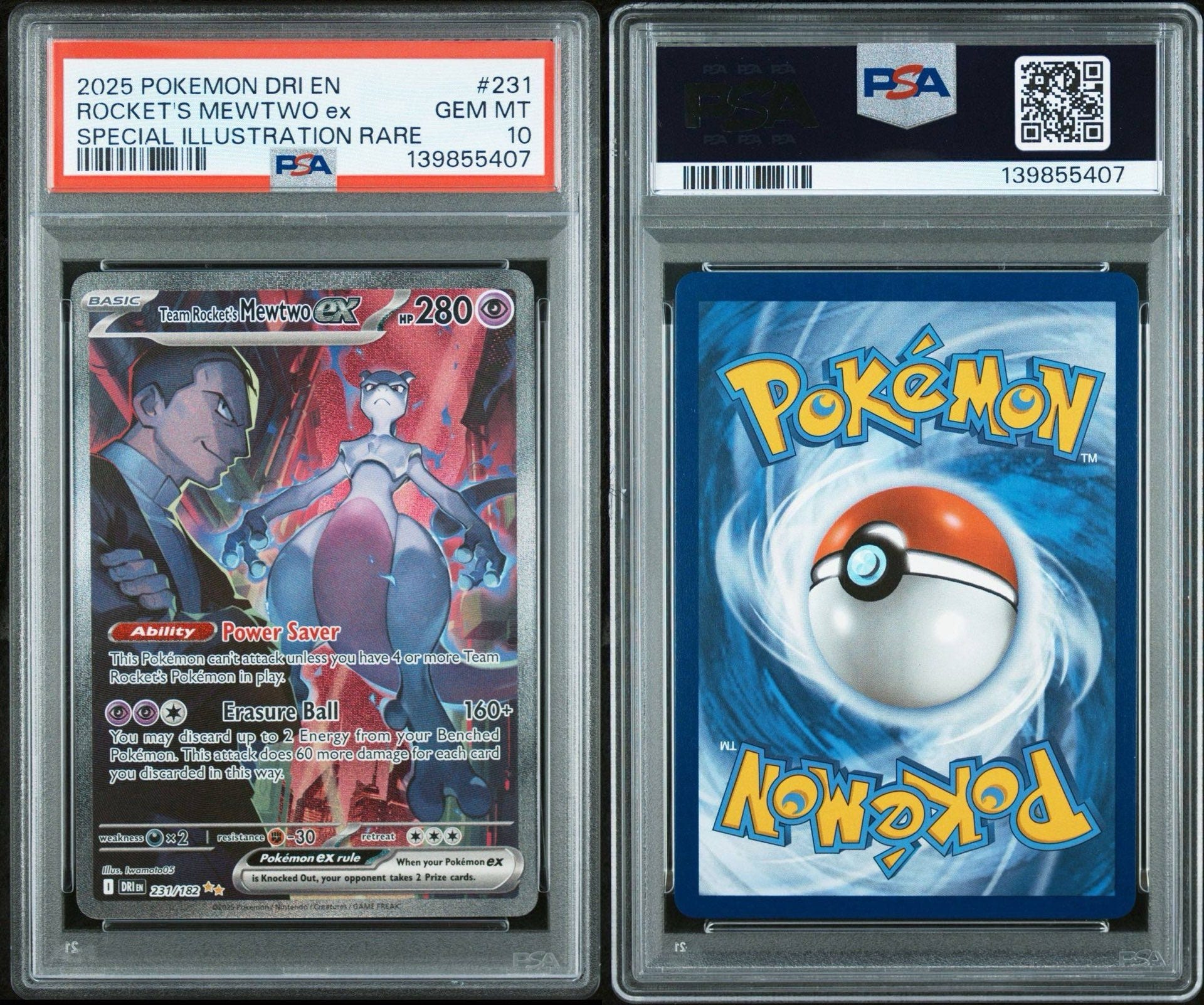
Estimated Sale Price: $1,140
Selling Fees: $114
Purchase Price: $545
Grading Costs: $60
Profit: $421
Total Submission Profit
Let’s look at total profitability on everything. We primarily evaluate ourselves based on ROI, which is the total profit divided by the initial cost of the cards. We generally target 25% ROI or higher, but we project to get about 50% PSA 10s on average. As a result, anytime we get more than 50% PSA 10s, we should expect our ROI to be higher than 25%.
Market fluctuations also can influence how far above or below target our ROI is. While cards are in grading, values usually change, sometimes going up and sometimes going down. In this case, the Mewtwo stayed relatively flat, while the Ohtani cards are up quite a bit since we bought them in December. The PSA 10 Bowman Chrome Shohei Ohtani card in particular increased from about $2,900 to $3,600, which is more than a 20% gain.
Revenue & Costs (Entire Submission)
Total Sales Price: $8,390
Total Initial Purchase Price: $3,447
Total Grading Costs: $658
Shipping Costs: $100
Total Profitability
Total Profit: $4,185
Total ROI: 121.4%
Due to all the factors explained above, this submission delivered a 121.4% ROI, well above our 25.0% target.
Thinking about this business more broadly, there is quite a bit of variation in ROI on each submission, based on grading results and market performance. While this sometimes makes grading feel like gambling, it’s not.
Having an average ROI of 25% with high variance means that some submissions will exceed 25%, while some will fall short. High profit submissions like this help to make up for submissions that are less profitable, although I will note it is very rare for our ROI on any single submission to drop below 10% (but it does happen). As a general rule, we try to stay disciplined and make decisions based on Expected Value that allow us to hit our targets over the medium-to-long term.
In other words, while results will fluctuate, this submission serves as a guide for what the best case scenario looks like in this business model.
Thanks for the breakdown. This was really informative. I’m curious if elsewhere you factor ROI for cards that you purchase that don’t end up being candidates for grading? I tend to sell these close to where I bought them at (so about a 15% loss after fees). I think it would ultimately still support your grading thesis of $100-$500 cards but just curious to how it changes the profit numbers