


An important but often overlooked part of buying cards to grade is figuring out who you’re buying from. While obviously you need to pay close attention to the quality of the card itself, the quality of the seller also matters.
The core issue is that if someone is an experienced grader, there’s a good chance they already know which of their cards can gem. That means the raw cards they’re selling are probably the ones that can’t. You’re better off avoiding these kinds of sellers altogether.
Who to Avoid
Large sellers, shops, and consigners rarely sell cards that are PSA 10 candidates.
If someone has thousands of cards listed, it’s a pretty safe assumption that they know what they’re doing (unless everything looks like it was recently pulled from a pack). A shop is even worse since you have no idea how the card was handled before it was listed on eBay. Plus you don’t know anything about why the original owner decided to sell to the shop rather than grading themselves.
Consigners are another category I avoid. In general, we don’t get good cards from consigners. The problem is that experienced sellers with high volumes of inventory use consigners more than the average collector, and therefore most of the cards are not PSA 10 candidates, even if they look like they are in the listing.
How to Evaluate a Seller’s Profile
Another important thing to search for on an eBay seller’s profile is their graded card history. PSA certification numbers are sequential, so if you see a seller with several high cert numbers, that tells you they’ve submitted to PSA recently. If a seller has certs in the 100000000 to 150000000 range, there’s a decent chance they’re actively grading and you want to avoid buying.
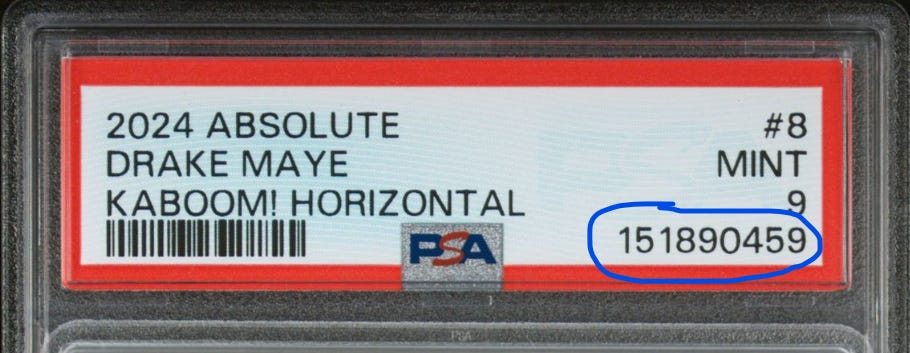
What you want to see is either no graded cards at all, or older cert numbers that suggest they haven’t graded in a while.
I also look at the overall shape of their inventory. Does their store have a lot of random 2025 cards across different sets and sports? That’s a good sign they’re just opening packs and selling. A small account with a mix of recent product and no graded cards is about as good as it gets.
Another good shortcut is to look for sellers with some feedback but not thousands of reviews. Fewer reviews usually means the seller is less serious, which is what you want. An unprofessional or random username and no profile picture are also good signs. It sounds counterintuitive, but those tend to be the people who are casual sellers, and therefore the people you want to buy from.
Takeaways
I’ll note that this is not a perfect system. There are plenty of PSA 10 worthy cards being sold from big accounts, and there are small accounts that are run by people who grade. But this is a strong prescreening method and needs to be a part of the evaluation process for any serious card grader.