


This post builds on an earlier article I wrote about our approach to diversifying our inventory. This feels especially relevant now, as Shohei Ohtani currently represents 25% of our card inventory, which is quite high compared to our normal exposure levels.
With that said, Shohei is a cultural icon and an all-time great, so we don’t want to stop buying Ohtani cards altogether. Instead, we will increase our target return on investment for his cards.
Note that all this is based on an Expected Value approach. You can find the formula below, but you can also read the Complete Guide to Expected Value here.
Expected Value = PSA 10 Value x Gem Rate + PSA 9 Value x (100% - Gem Rate) - Grading Costs - Selling Fees
Looking At a Concrete Example
2018 Shohei Ohtani Topps Chrome #HMT1
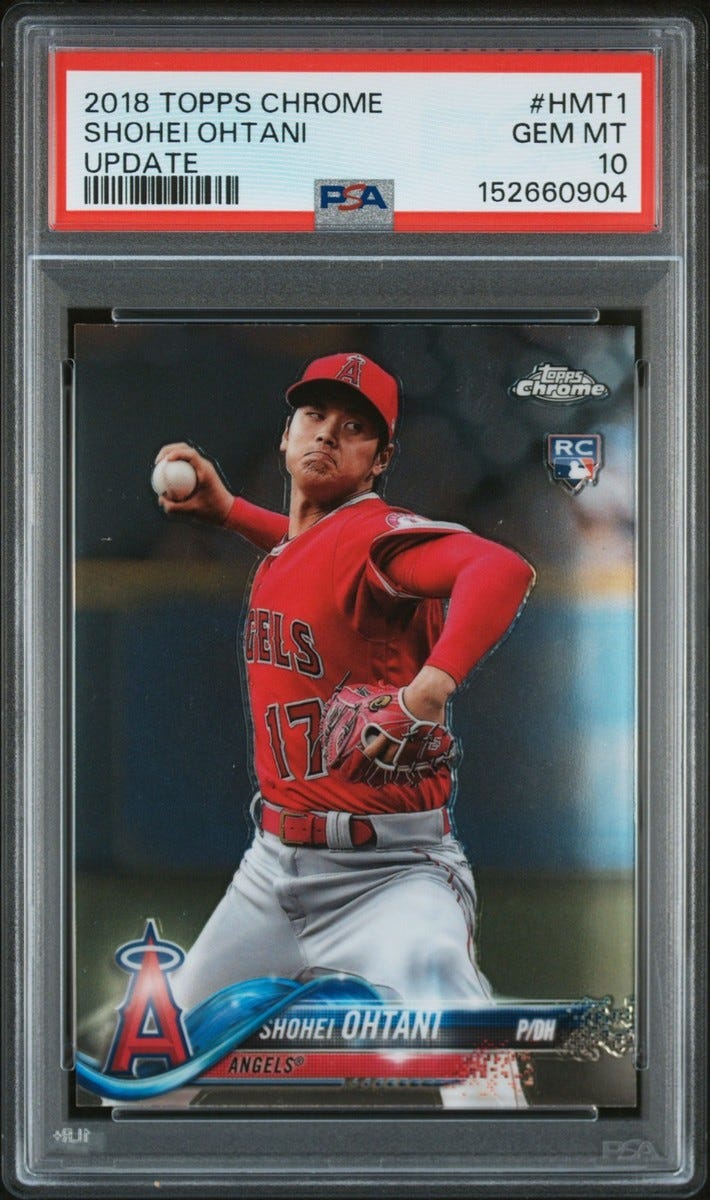
This is a good example card, because it’s one we are actively buying using this methodology. Let’s start by calculating the Expected Value of the card.
PSA 10 Value | $785
PSA 9 Value | $280
Gem Rate | 62.5%
Expected Value | $453.67
Our general target ROI is 25%, which is the threshold we use for cards where we don’t have elevated exposure. The maximum price we can pay is EV / (1 + Target ROI). If we buy at that price, we expect to hit our target return on average.
Target ROI | 25.0%
Max Bid | $362.94
Given our current Ohtani exposure, we’ve raised our target ROI specifically for his cards to 35%. Here’s how that changes our maximum buy price.
Target ROI | 35.0%
Max Bid | $336.05
On the surface, a $27 difference in the maximum bid doesn’t look like much. But this can have a real impact. While we’ve bought a few of these cards lately, there’s also been multiple Ohtani cards that we’ve narrowly missed out on buying because of this adjustment. With the adjusted threshold, we only buy this card when we find a very solid deal.
You can apply the same logic to any card where your exposure is running high, but you can use any ROI target you like. If you had heavy Konnor Griffin inventory heading into his debut, you might push your target ROI to 45% given the high risk of investing into an unproven prospect.
The specific number matters less than the principle: when concentration goes up, your required return should go up with it. It’s a simple way to let the math do the risk management for you without having to set hard limits on what you’ll buy.