


It’s not always easy to decide whether or not to submit a card. Some cards you buy are flawless, and there’s no doubt that you should submit them. Some come with significant defects and you know that you definitely shouldn’t submit them. It’s the cards that fall somewhere in the middle that are the hard ones.
We’re going to look at one of these middle cases in this post.
Hey everyone. I’m working on building a Facebook page with more card grading content! I’d really appreciate if you dropped a follow. You can find it here.
Evaluating the Card
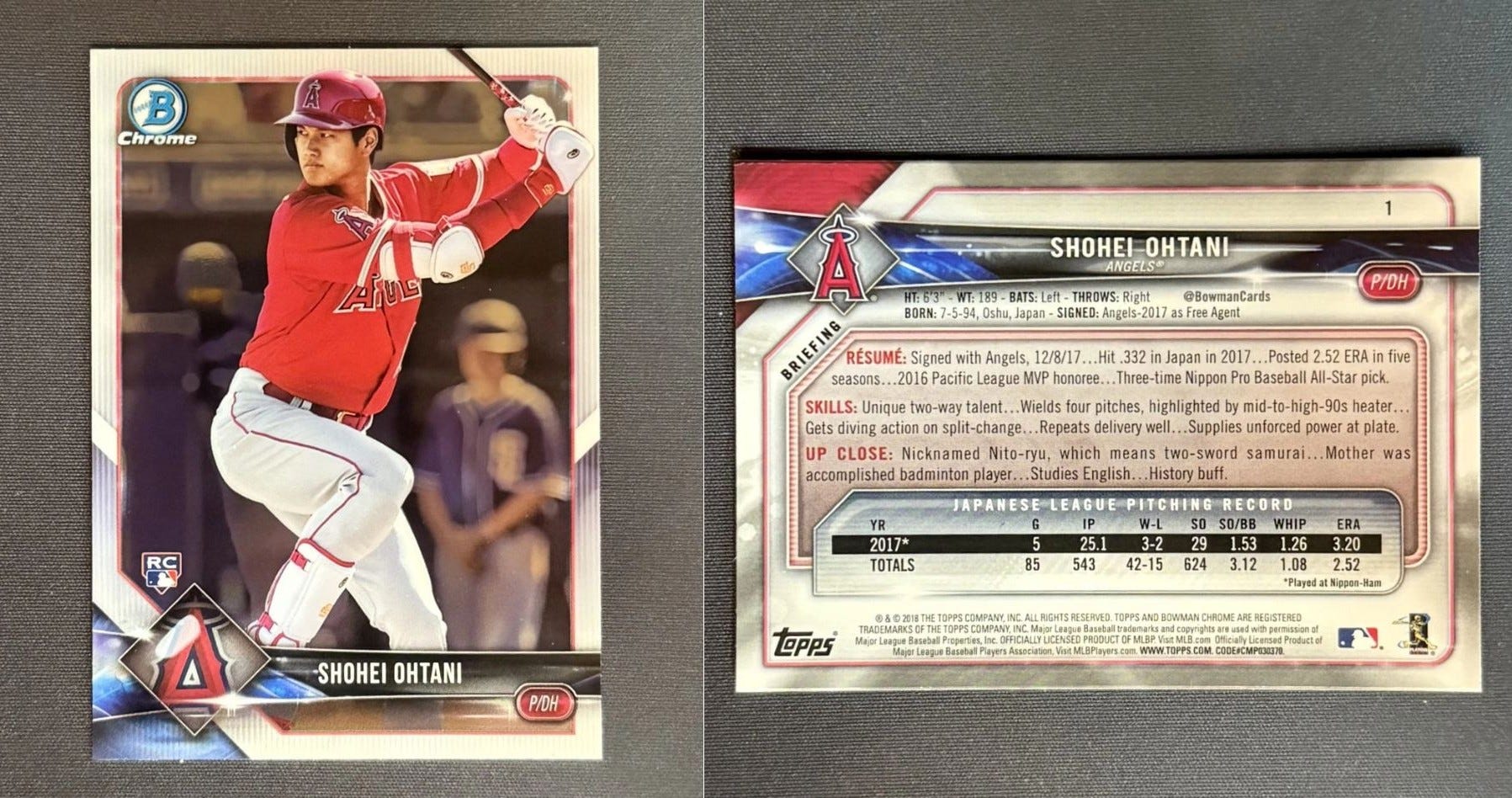
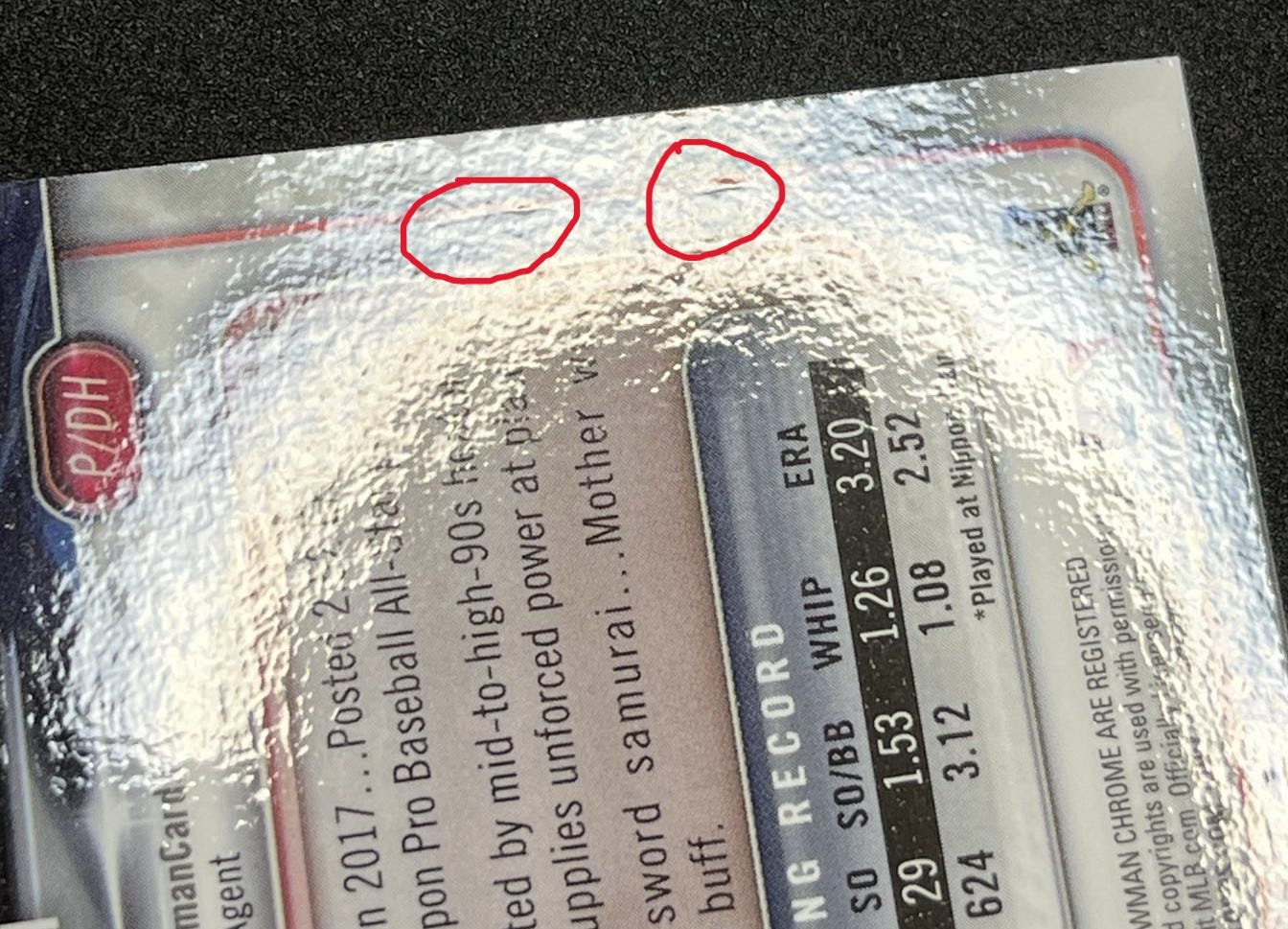
We bought this Shohei Ohtani card back in December for a really solid price, but it came in with some flaws that we didn’t notice in the original listing. I’ve attached pictures below of the card, the defects on the card, and our pregrade notes from when we initially evaluated this.
Card Front & Back:
Defects:
Pregrade Notes:
Top/bottom centering about 53/47.
Back edges slightly rough. Don’t think it’s a big deal.
Back has two small nail-size scratches/shallow indents. Great card otherwise.
Estimated Gem Probability: 20%
I want to point out a few things about the pregrade before we go into the decision making process. In general, the line between a deep scratch and a shallow indent is extremely thin, and indents are one of the more reliable ways to drop from a PSA 10 to a PSA 8. That meant there was a wide range of possible outcomes here. You can read more about this in our Complete Guide to PSA Grading.
I’ll also note that getting the lighting right is extremely important to any good pregrade. The marks were completely invisible without a light shining directly on them.
And lastly, this card benefits from the fact that the defect is on the back instead of the front. We’ve learned that condition on the front is more important than the back for PSA grading.
To Submit or Not To Submit
The decision of whether or not to submit this card might seem like a debate about the condition of the card. And to some extent it is. We first identified that the card had a 20% chance as grading as a PSA 10, but what to do with that information is the important part. Ultimately, we used Expected Value to make our decision.
I’m going to walk you through the math of this decision below, but for a more detailed explanation read our Complete Guide to Expected Value.
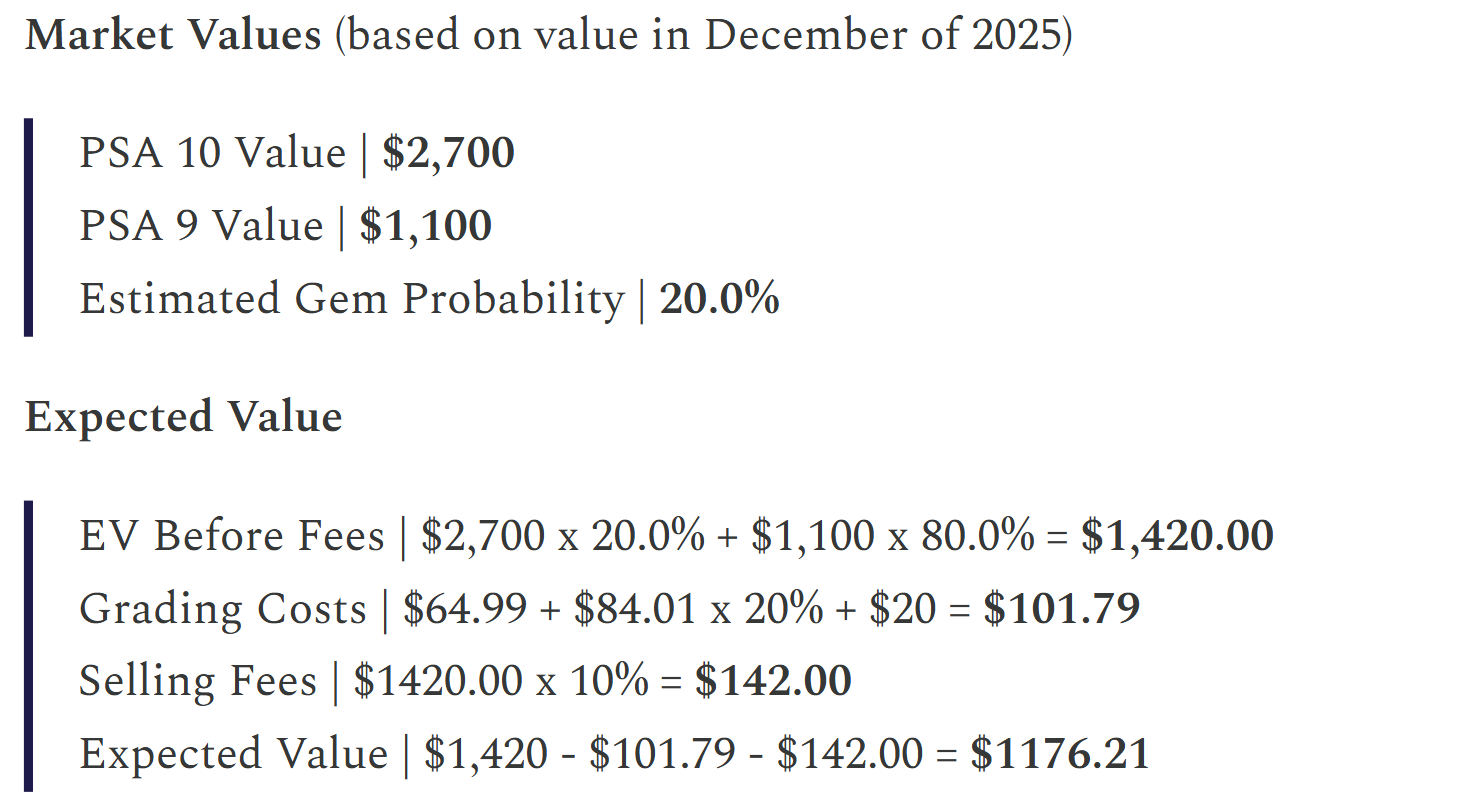
Alternatively, we could have sold the card raw on eBay. The market price was about $1,050 and the fees on eBay are 13.25%, meaning that the sale would have netted $910.88 after fees.
In this case, we estimated that the value of submitting the card to PSA was about $265 higher than selling it raw. When we broke this down mathematically, this went from a challenging decision to an easy one.
Sometimes It Works Out
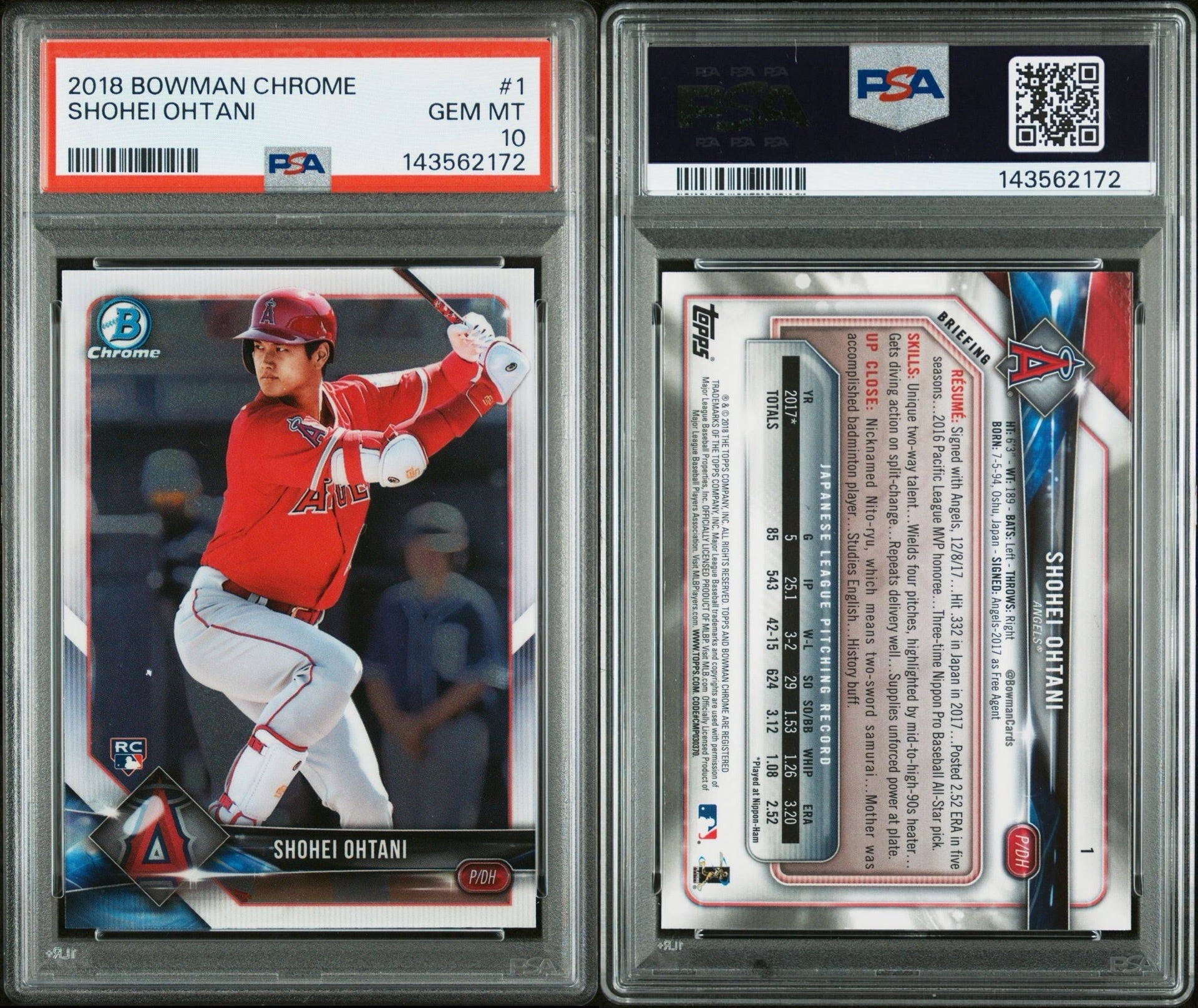
There’s a reason we submit risky cards. Sometimes they grade as PSA 10s, and when they do, the payoff is generally very large. In this case, we assumed that this would get a PSA 10 just one time out of five. And that’s fine, because that one PSA 10 more than makes up for the other four.
For this Ohtani card, our risk was rewarded with a strong profit margin. It doesn’t always work out this way, but this is the process we try to follow regardless of the results. Good profits come from maintaining a good process over time.